
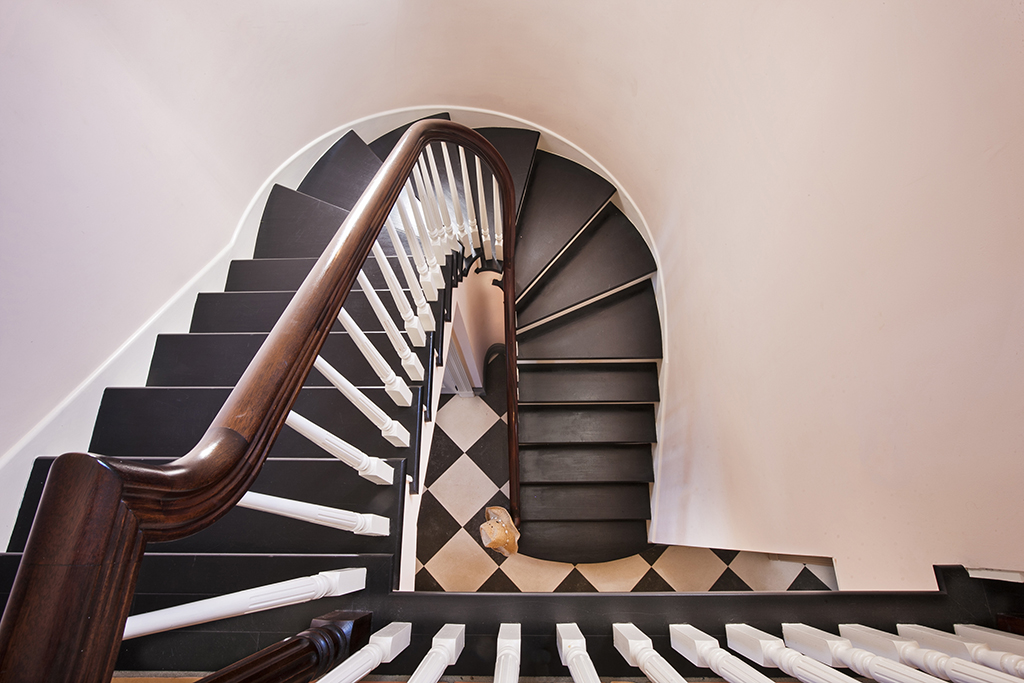
The statement: "…WE DESIGN ..." is frequently the answer to the question of "WHAT DO ARCHITECTS DO...?"
“DESIGN” is the process of creating and shaping the form, relationship of functions and features of an object, building, civic space, or spaces within a building. It is intended to achieve a functional solution to a specific set of needs and to stimulate an appropriate emotional response from the user or viewer while doing so. By its very nature, Design is a multilayered and complicated process. It considers occupancy, budget, program, functionality, adjacency, geometry, texture, scale, balance, color and light.
Influenced by climate, topography, context, laws, traditions, history and culture; Design is almost always the product of fusing an evolving idea with creative persistence. Guided by the architect, the design progression nurtures the strengths and promising portions of positive ideas ─ while whittling away at the flaws of unworkable alternatives. Even the most basic design procedure and the exploration of alternatives generated, usually results in an enhanced understanding of a proposed project. That is always beneficial.
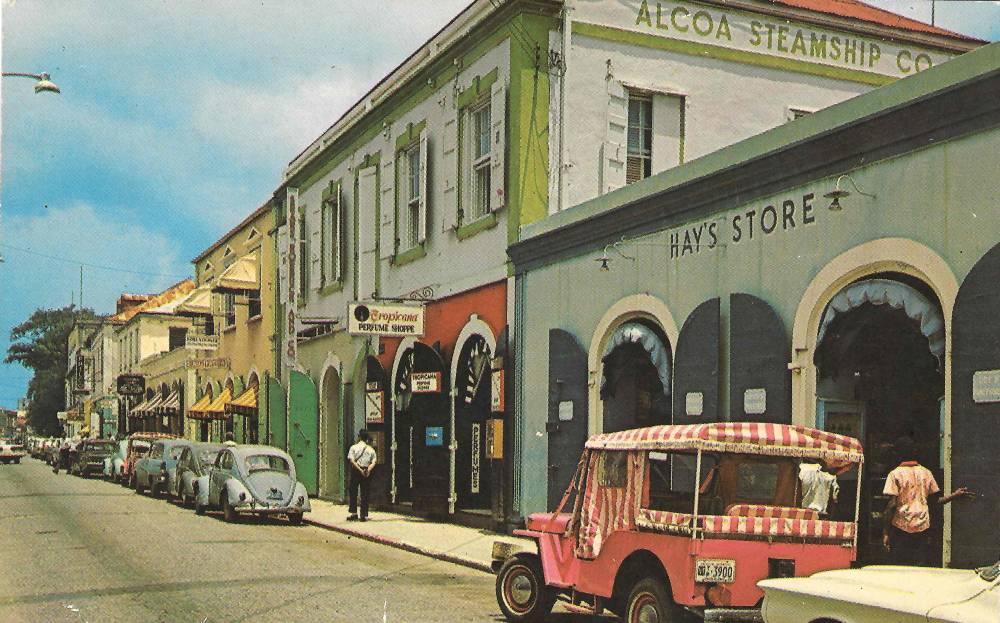
Postcard from the collection of Myron Jackson
USE THE HISTORY OF THE PAST AS A MODEL FOR FUTURE IN THE REHABILITATION OF CHARLOTTE AMALIE:
This series presents a chronicle of events which led to the deterioration of spirit, vitality and energy of today’s urban Charlotte Amalie and offers a guide on how to reverse that decline and restore those qualities to the Town.
This document and its content is the copyright of The deJongh Group - © The deJongh Group 2015. All rights reserved.
PART 1 OF A 6 PART SERIES: WHAT TIME PERIOD TO CHOOSE?
Recently, I was asked for my thoughts on how to rehabilitate our Downtown Charlotte Amalie to add life and vitality; to make it more vibrant and inviting to overnight visitors and local residents, and to fuel added economic benefits, with stores staying open late, and nightlife and entertainment after dark.
My response was: “First, research the history of the Town, and model its revitalization ─ with updates and adjustments for current demands and the dynamics of time. Then, base the revitalization on the period when the desired qualities existed in the greatest abundance, and the community’s balance was at its peak." This is not to suggest that there was ever a juncture in our history that was perfect; when there was no poverty, no problems to be resolved, tensions to be diffused, or scandals to be extinguished.
So, which period in the history of Charlotte Amalie ─ in the American era ─ would best serve as this guide?
- It could not be the decade of the nineteen-teens. The hurricane of 1916 had devastated the community. The transfer of the Islands from Denmark to the USA had just taken place. World War I was winding down and American/Virgin Islands ownership was still being sorted out in the minds of the community.
The note simply said: "Hey… I'm moving to India. GOOD LUCK"
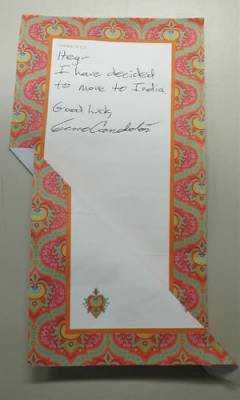
With those words, the person developing and hosting our website suddenly vanished, abandoning and pulling the plug on the hosting. Our website shuddered, shrugged, exhaled a puff of digital smoke, went dark and disappeared.
We could have searched for him and for our website. But in India? Really? And to whom would we have inquired anyway?
A thin, Forty-something White guy with short, brush-cut hair, 1 1/2 inch diameter wooden disks inserted into expanded holes in both earlobes, carrying thousands of our dollars and our website in an invisible cyber-briefcase would stand out conspicuously in most Virgin Islands crowds. I could have found him here. But India is a huge country, teeming with more than a billion people and a multitude of cultures. And what would we have done when we captured him anyway? Force him to regurgitate our website?